Does the record earn the story?
The transistor has one of technology's best-known origin stories. We are checking the notebooks, patents, wartime semiconductor work and physics underneath it—keeping the parts that hold up and marking the parts that don't.
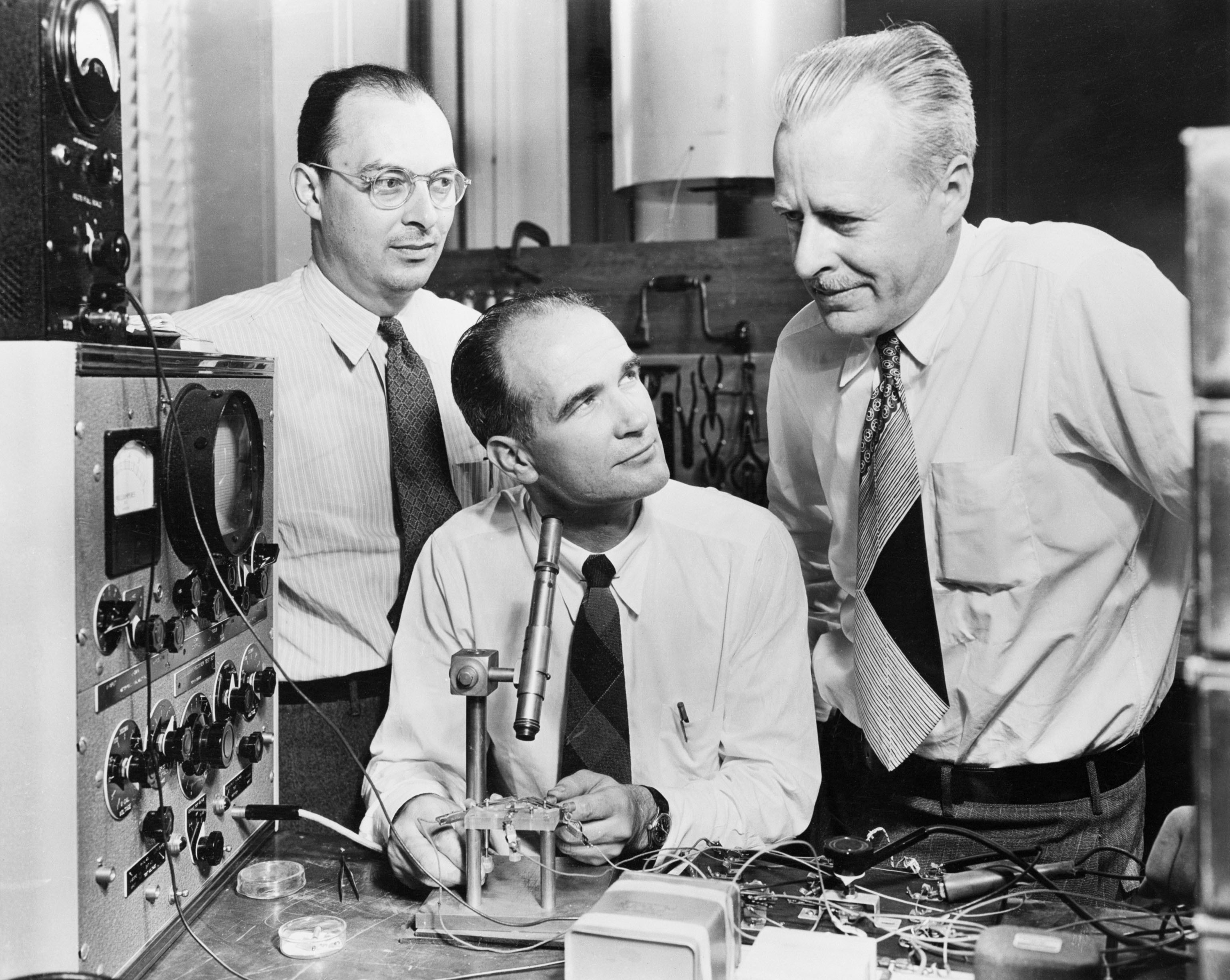
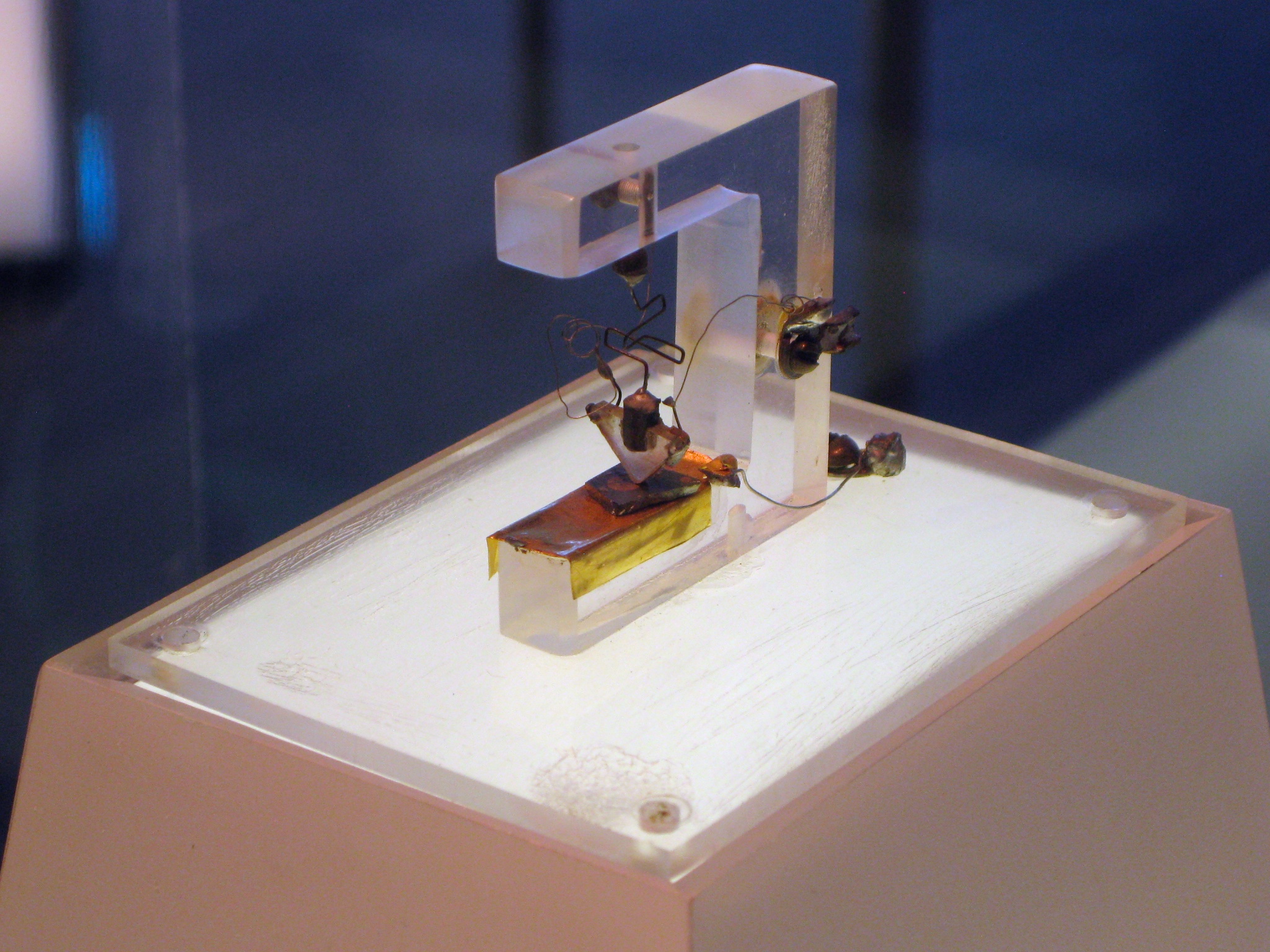
A messier story, not yet a different one.
The surviving evidence strongly supports a real Bell experimental program. It also reveals a much richer wartime semiconductor ancestry and more retrospective compression than the popular story usually conveys.
Several suspicious-looking claims have already collapsed. Suitable high-back-voltage germanium did not simply appear from nowhere in 1947; Bell's wartime process lineage is documented. The supposed sudden invention of a two-close-point geometry on December 16 also weakens when the December 4 notebook is read directly.
Other questions remain unusually consequential: the provenance of Shockley's January 23 junction note, the shift from a surface-dominated explanation toward bulk minority carriers, what the missing close-contact calculation actually contained, and how much the public story changed during months of private patent and theory work.
The odd facts we have learned not to notice.
An accepted glitch is a fact already present in the standard history that stops feeling incongruous because the ending is so familiar. It is not evidence of a secret origin. It is a place where explanatory glue should be checked.
Loading the register…
Watch claims survive—or fail.
Experiments and simulations are becoming public objects while they run. Inputs, assumptions, status, failures, numerical results and the things a run does not prove stay attached to the record.
Loading recent runs…
The browser can become part of the research.
Our Chromium fork is being designed to recognize Transductive sites and ChatGPT sessions as first-class entities: things it can follow, fork, attach context to and eventually donate declared compute toward.
Read the investigation.
The essays are working documents. Their job is to make the evidence legible without asking the reader to adopt our internal vocabulary.
Run a piece of the investigation yourself.
Each open task comes with a small master guide and a run prompt. The guide tells another model or researcher what counts as evidence, what must remain unresolved, and what would falsify the proposed anomaly.
Loading open tasks…